


TalePaths | Your story awaits

New travel blog every Thursday!

Through the Shadow of the Silk Road: A Human Thread Across Asia

Some journeys trace not just a route but a deep seam of memory, crossing borders where time feels layered and fragile. The Silk Road unfolds beneath your feet as a living corridor of voices, languages, and encounters—each landscape shaped by centuries of trade and longing, each city carrying the weight of aspirations and loss. You move through shifting steppe, desert, and mountain, feeling the slow transformation of self that comes from watching worlds change, and from the fragile connections formed over tea, in markets, or along a distant caravan trail. This is a passage for those who travel with patience, curiosity, and a sense of reverence for the stories that linger in quiet corners and dusty crossroads.

Inspired by:
Shadow of the Silk Road
by
Colin Thubron
Currated by:
Markos Sarimanolis
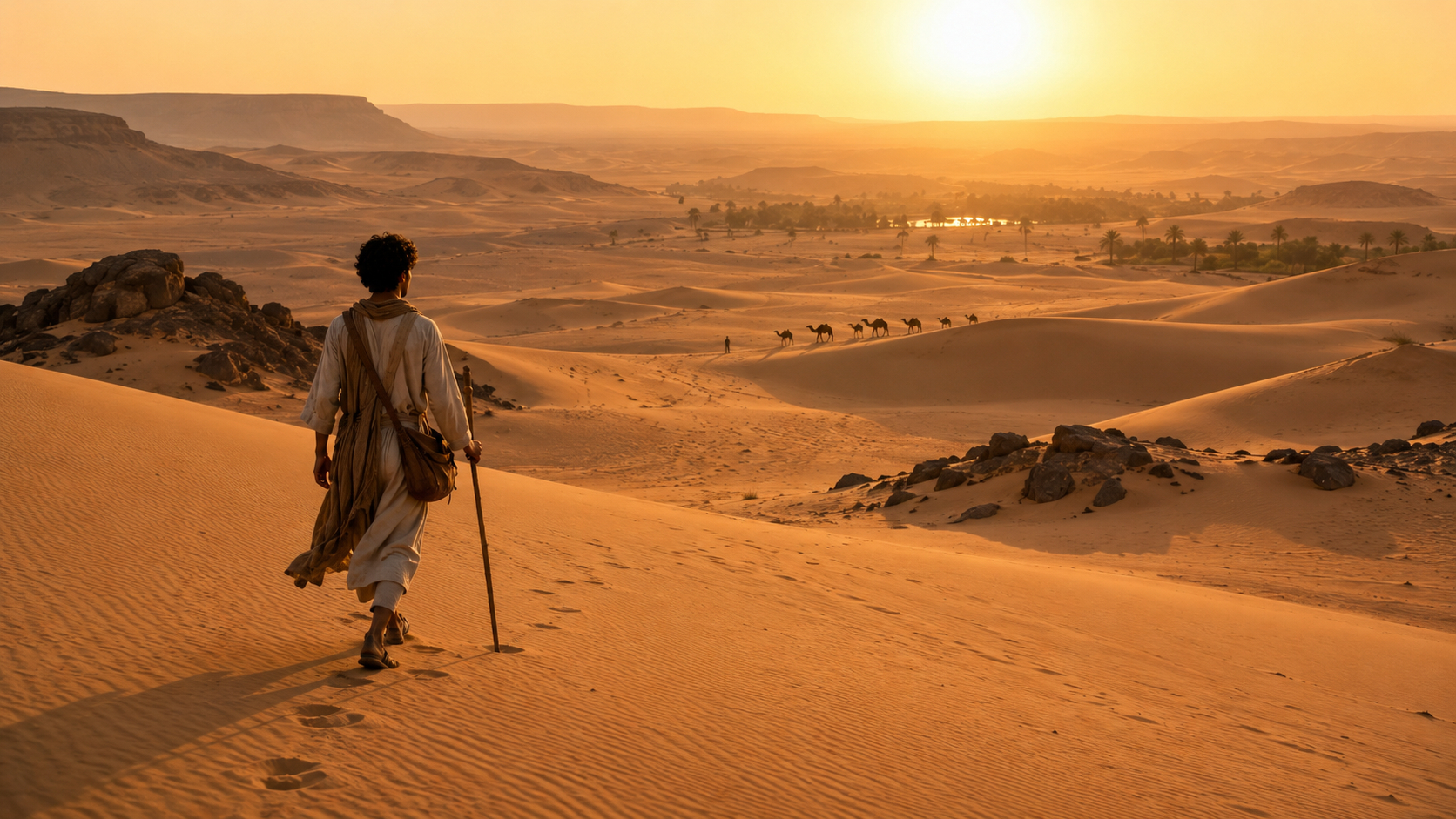
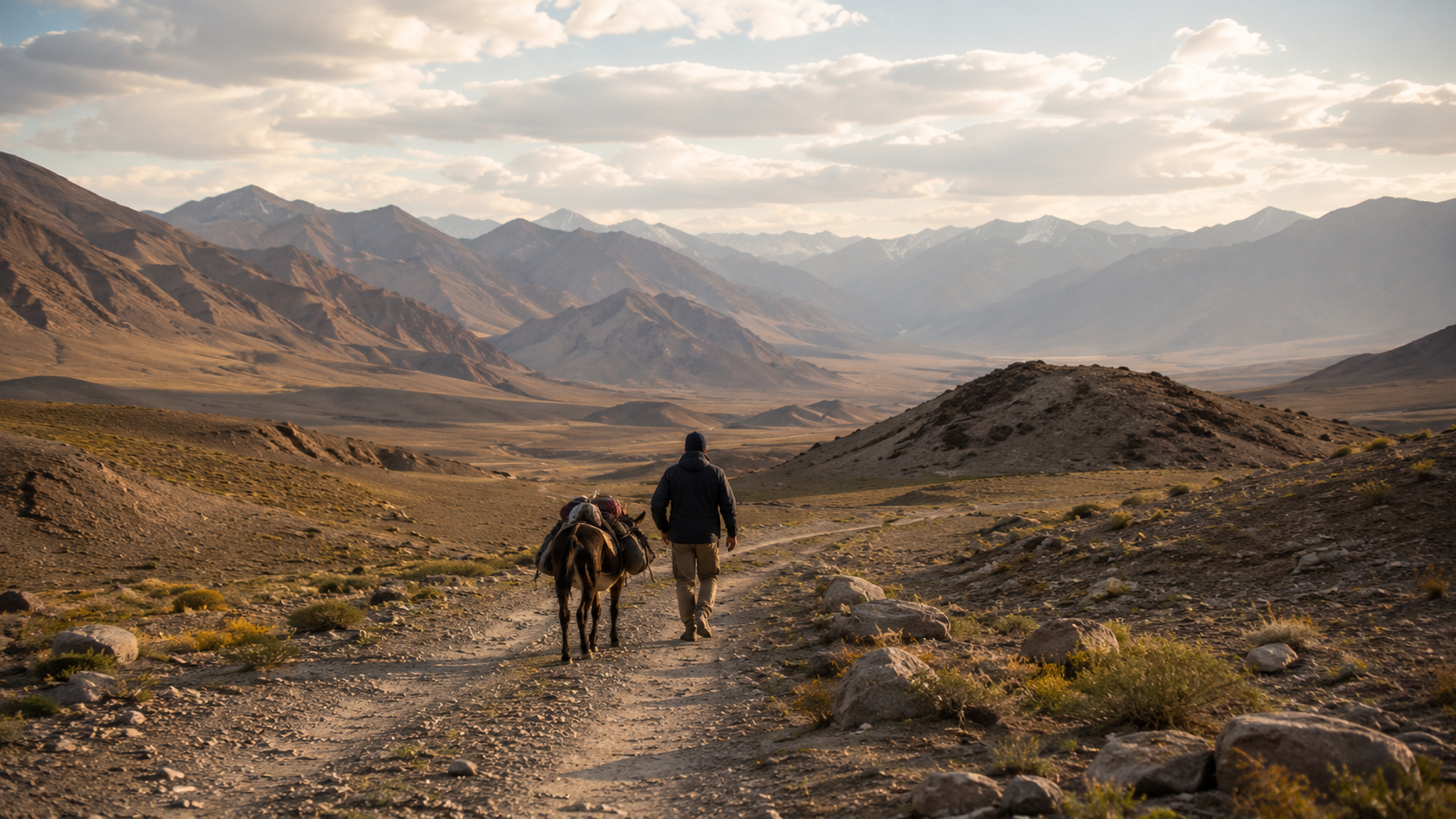
Silk Road travelers walking across Central Asian steppe with distant domes and caravan traces

The first light touches the ancient city walls of Xian. Here, the Silk Road begins its uncertain thread, drawn westward across a continent shaped by the restless movement of traders, soldiers, and dreamers. You step into the morning bustle—steam rising from breakfast stalls, murmurs of Mandarin, the faint echo of hoofbeats lost to history. The city’s terracotta sentinels remind you that every step forward is a negotiation with the past, and you feel the anticipation of a journey that will unravel piece by piece, from the heart of China to the far edge of Asia.

As the train rattles into the wild expanse of the Gansu Corridor, your world opens into ochre mountains and wind-scoured plains. Passing through Dunhuang, you sense the deep pull of desert silence, where Buddhist caves carved into rock shelter centuries of faded paintings and whispered prayers. Camels still move along these routes, and you realize how the rhythm of travel—slow, persistent, uncertain—mirrors the way stories and beliefs once migrated across the sand. The landscape shifts: minarets rise from oasis towns, and the language of the market changes with each stop, a reminder of how the Silk Road never truly belonged to one culture alone.

Silk road truck at 12000 feet
The Silk Roadies at an elevation of 12000 feet | Photo by lensnmatter, CC BY 2.0, via Wikimedia Commons

Xian

In Xian, the Silk Road’s eastern gate, the city’s massive walls and labyrinthine Muslim Quarter frame a world where dynasties once orchestrated vast exchanges of silk, spices, and ideas. Walking the city ramparts, you catch glimpses of everyday life unfolding below—bakers pressing sesame flatbreads, the scent of cumin and charcoal, the clatter of bicycle bells. The Great Mosque, hidden in a web of alleys, stands as testament to the city’s long embrace of travelers from distant lands. Here, you sense how Xian’s history is alive in the rhythm of the streets, not static in museums.

In Xian, you begin to feel the Silk Road as a living memory, not just a legend.

If you want to experience this in real life: Walk the Ramparts Beneath Xian’s Dawn

See this location on the map

Dunhuang

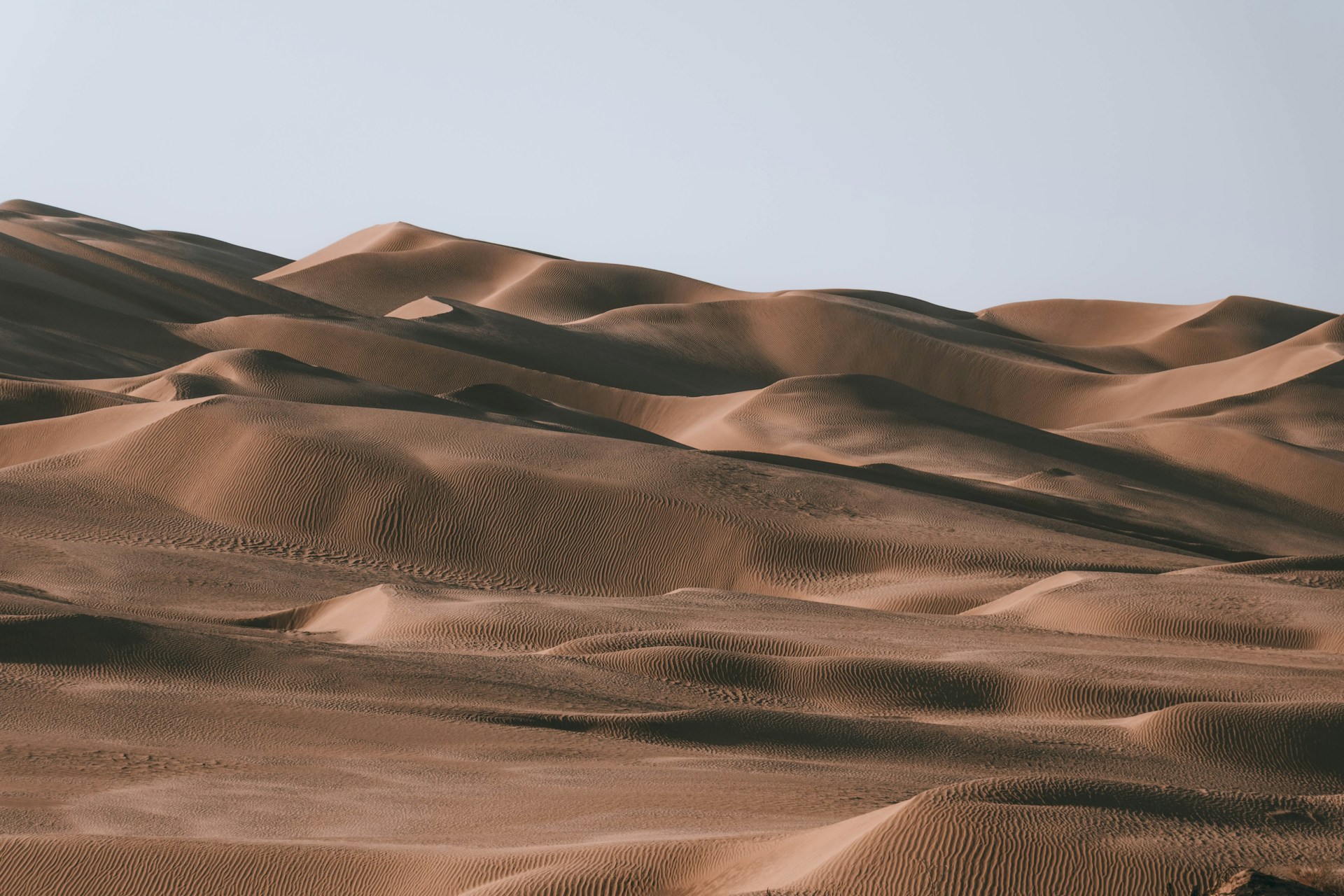
At the edge of the Gobi, Dunhuang’s Mogao Caves glow with the stories of travelers who paused here on their way west. The city feels suspended between sand and sky; Buddhist murals flicker under torchlight, revealing faces and motifs carried from India, Persia, and beyond. Markets hum with the trade of dates, nuts, and silk scarves. At sunset, you walk to the singing sand dunes, listening to the wind’s hollow melody and realizing how isolation and encounter are inseparable along the Silk Road.

In Dunhuang, you sense the desert’s memory, held in every painted wall and drifting grain.

If you want to experience this in real life: Stand at the Edge of the Gobi

See this location on the map

International Dunhuang Programme official website

Turpan

Turpan’s oasis emerges like a miracle from the desert—a city nourished by ancient karez water tunnels, where grape trellises shade winding lanes and Uyghur music drifts over open courtyards. Here, you taste sweet melons and feel the heat of the Turpan Depression, where the land sinks far below sea level. The ruins of Jiaohe, a walled city abandoned for centuries, remind you of the Silk Road’s fragility and resilience. The culture is layered: Islamic, Turkic, Han, all blending in the rhythms of market stalls and sunset prayers.

Turpan leaves you with a sense of survival—a place where life persists against the odds.

If you want to experience this in real life: Follow the Water Under Turpan’s Sand

See this location on the map

Kashgar

Kashgar feels like a crossroads at the edge of empires. Its Sunday Bazaar thrums with barter and laughter; Uyghur architecture, with wooden balconies and carved doors, blurs the boundary between Central Asia and China. The Id Kah Mosque anchors the old town, where you watch artisans hammer copper, and children dart through the shadowy lanes. Horse carts rattle past, and you realize that centuries of Silk Road travelers have shaped—and been shaped by—this meeting place of faiths and languages.

Kashgar’s energy is restless and old, a reminder that every ending is a new beginning.

If you want to experience this in real life: Lose Yourself in Kashgar’s Crossroads

If you want to experience the whole trip from Xian to Kashgar: Embark on a 12-day experience of the Silk Road

See this location on the map

Samarkand

Samarkand’s turquoise domes appear after miles of dry steppe, shining above the Registan’s mosaic majesty. The city’s history as Tamerlane’s capital is felt in every arch and shadow. You walk under avenues of mulberry trees, sampling plov and pomegranate juice, as stories of astronomers, poets, and conquerors linger in the air. The local markets, filled with saffron and silk, echo with Uzbek, Tajik, and Russian voices. The grandeur is never distant from the human scale—children chasing pigeons, elders gathered in shaded courtyards, the warmth of hospitality persisting through time.

Samarkand leaves you quietly awed by the endurance of beauty and memory.

If you want to experience this in real life: Stand in the Shadow of Samarkand’s Domes

See this location on the map

Bukhara

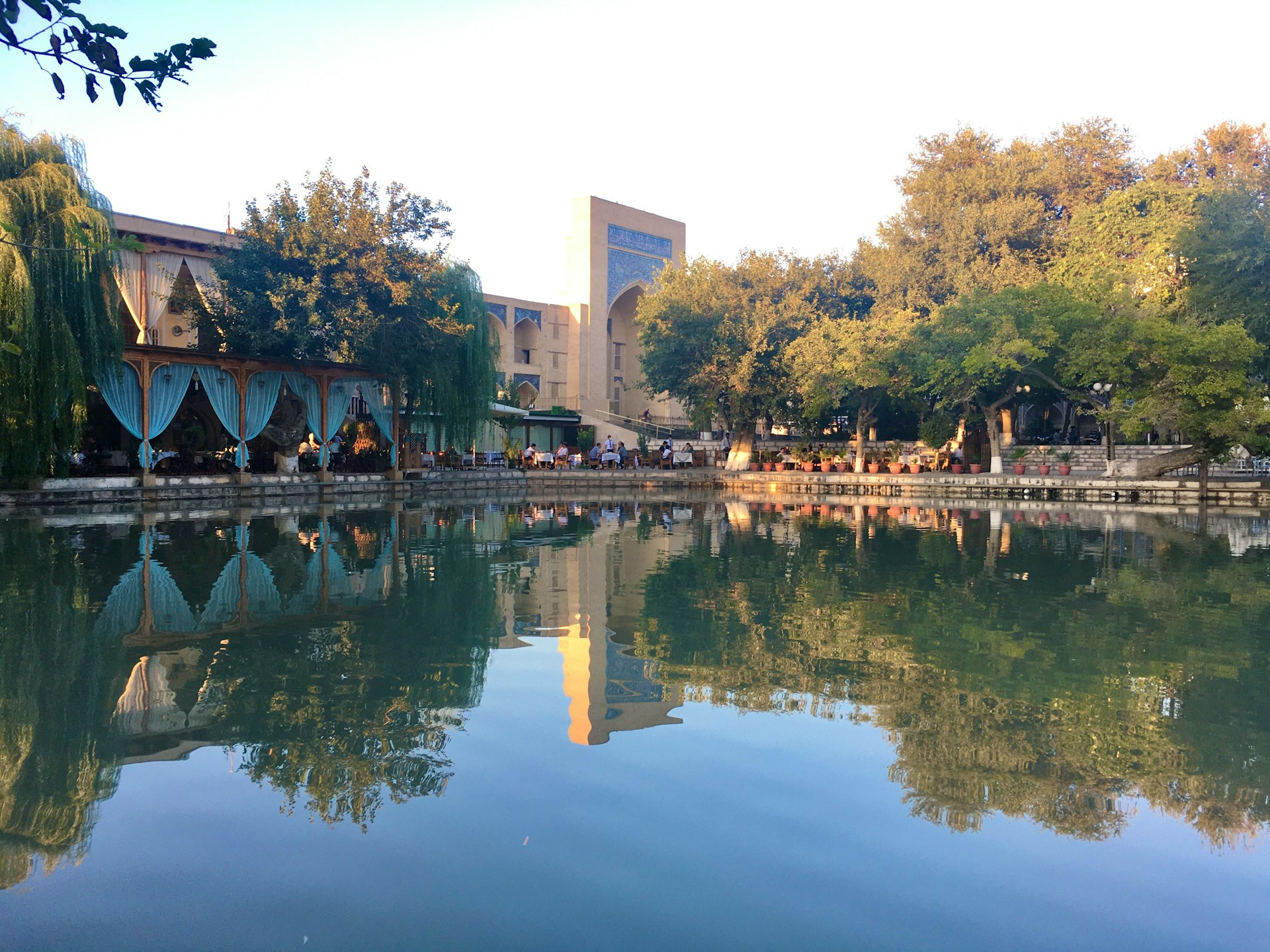
Bukhara’s old town is a maze of madrassas, minarets, and caravanserais. The Lyab-i Hauz pool glimmers under plane trees, inviting you to linger among storytellers and tea sellers. In the covered bazaars, merchants still trade carpets and ceramics, their patter echoing back centuries. The city’s Sufi shrines and fortress walls are reminders that Bukhara has always been a place of learning and spiritual searching, where Persian poets and mathematicians debated under the same stars that guide you now.

Bukhara leaves you with the quiet assurance that some wisdom endures through ages.

If you want to experience this in real life: Wander Bukhara’s Bazaars at Dusk

See this location on the map

Merv

Merv’s ruins sprawl across the Turkmen steppe, silent under a vast, cloudless sky. Once a metropolis that rivaled Baghdad, its earthen walls and broken domes are now home to lizards and shifting shadows. You walk among the remains of ancient palaces, feeling both the humility and awe that come from standing atop so many lost foundations. The city’s legacy as a center of learning, science, and faith is almost palpable, even as the wind carries away the last traces of its glory.

Merv’s silence teaches you how much of history lies just beyond reach, yet still shapes you.

If you want to experience this in real life: Trace the Lost City on Merv’s Steppe

See this location on the map

Tehran

Tehran, at the Silk Road’s western edge, hums with a different energy. Modern towers rise beside Qajar palaces; bazaars overflow with pistachios, carpets, and laughter. You pass from the cool hush of Golestan Palace to busy streets where young Iranians debate poetry and politics in cafés. The city reveals layers of Persian, Islamic, and modern identities—sometimes in tension, sometimes in harmony. You sense how centuries of encounter and exchange still shape the city’s restless optimism and its quiet corners of nostalgia.

In Tehran, you feel the Silk Road’s legacy—an unfinished conversation carried forward in every face you meet.

See this location on the map

Silk Road Map

Silk Road Quotes

“The road is always longer than you imagine.”
“A landscape is never empty; it is crowded with memory.”
“Trade brings strangers together, but stories make them kin.”
“Every border crossed leaves a mark on the heart.”
“In desert silence, the self is never truly alone.”
“There is no single Silk Road—only the one you choose to walk.”
“Hospitality is the Silk Road’s oldest tradition.”
No items found.

Appendix

Flight Cost Estimates by Departure City and Destination Airport

Departure City Destination Airport Budget Flight Mid-range Flight Premium Flight Notes
Rome Xi'an Xianyang International Airport (XIY) €650 €950 €1800 1 stop typical
London Xi'an Xianyang International Airport (XIY) £600 £900 £1700 1 stop typical
New York Xi'an Xianyang International Airport (XIY) $900 $1300 $2600 Connection required
Los Angeles Xi'an Xianyang International Airport (XIY) $850 $1250 $2400 Good Asia connections
Tokyo Xi'an Xianyang International Airport (XIY) ¥50,000 ¥82,000 ¥200,000 Direct flights available
Beijing Xi'an Xianyang International Airport (XIY) ¥800 ¥1,400 ¥3,000 Frequent domestic flights
Rome Samarkand International Airport (SKD) €700 €1000 €1850 1-2 stops, Central Asia route
London Samarkand International Airport (SKD) £650 £950 £1800 Connection via Istanbul common
New York Samarkand International Airport (SKD) $1000 $1400 $2700 2 stops typical
Los Angeles Samarkand International Airport (SKD) $1100 $1500 $2800 Connection via Europe
Tokyo Samarkand International Airport (SKD) ¥65,000 ¥95,000 ¥210,000 1-2 stops, via Seoul/Istanbul
Beijing Samarkand International Airport (SKD) ¥2,500 ¥4,000 ¥8,000 1 stop in Central Asia
Rome Tehran Imam Khomeini International Airport (IKA) €480 €850 €1600 Good European route
London Tehran Imam Khomeini International Airport (IKA) £430 £790 £1550 1 stop, seasonal variation
New York Tehran Imam Khomeini International Airport (IKA) $950 $1300 $2500 Multiple stops, no direct
Los Angeles Tehran Imam Khomeini International Airport (IKA) $1050 $1450 $2700 Connections via Europe/Asia
Tokyo Tehran Imam Khomeini International Airport (IKA) ¥65,000 ¥100,000 ¥210,000 1-2 stops, seasonal
Beijing Tehran Imam Khomeini International Airport (IKA) ¥4,800 ¥8,000 ¥16,000 1-2 stops, regional hub

Estimated On-the-Ground Travel Costs — Xi'an

Traveler CurrencyBudget Daily CostMid-range Daily CostPremium Daily Cost
EUR (€)€35€65€140
GBP (£)£30£55£120
USD ($)$38$70$150
JPY (¥)¥6,000¥11,000¥23,000
CNY (¥ / RMB)¥270¥500¥1,000

Estimated On-the-Ground Travel Costs — Dunhuang

Traveler CurrencyBudget Daily CostMid-range Daily CostPremium Daily Cost
EUR (€)€28€55€110
GBP (£)£24£47£98
USD ($)$30$60$120
JPY (¥)¥5,000¥10,000¥20,000
CNY (¥ / RMB)¥210¥420¥850

Estimated On-the-Ground Travel Costs — Turpan

Traveler CurrencyBudget Daily CostMid-range Daily CostPremium Daily Cost
EUR (€)€25€48€95
GBP (£)£22£42£85
USD ($)$27$52$105
JPY (¥)¥4,300¥8,500¥17,000
CNY (¥ / RMB)¥180¥350¥700

Estimated On-the-Ground Travel Costs — Kashgar

Traveler CurrencyBudget Daily CostMid-range Daily CostPremium Daily Cost
EUR (€)€26€50€100
GBP (£)£23£44£90
USD ($)$28$55$110
JPY (¥)¥4,500¥9,000¥18,000
CNY (¥ / RMB)¥190¥370¥750

Estimated On-the-Ground Travel Costs — Samarkand

Traveler CurrencyBudget Daily CostMid-range Daily CostPremium Daily Cost
EUR (€)€30€60€120
GBP (£)£26£52£105
USD ($)$32$65$130
JPY (¥)¥5,000¥10,000¥20,000
CNY (¥ / RMB)¥230¥470¥950

Estimated On-the-Ground Travel Costs — Bukhara

Traveler CurrencyBudget Daily CostMid-range Daily CostPremium Daily Cost
EUR (€)€28€58€110
GBP (£)£24£50£96
USD ($)$30$62$120
JPY (¥)¥4,800¥9,800¥19,000
CNY (¥ / RMB)¥220¥450¥850

Estimated On-the-Ground Travel Costs — Merv

Traveler CurrencyBudget Daily CostMid-range Daily CostPremium Daily Cost
EUR (€)€29€57€115
GBP (£)£25£49£100
USD ($)$31$60$120
JPY (¥)¥4,900¥9,600¥19,200
CNY (¥ / RMB)¥225¥440¥900

Estimated On-the-Ground Travel Costs — Tehran

Traveler CurrencyBudget Daily CostMid-range Daily CostPremium Daily Cost
EUR (€)€32€62€130
GBP (£)£28£55£115
USD ($)$34$66$140
JPY (¥)¥5,300¥10,500¥21,000
CNY (¥ / RMB)¥245¥480¥980

Points of Interest

  • Xi’an City Walls & Muslim Quarter — living history and street life
  • Mogao Caves, Dunhuang — ancient Buddhist murals and manuscripts
  • Karez Water Tunnels, Turpan — ingenious desert irrigation
  • Jiaohe Ruins, Turpan — atmospheric Silk Road ghost city
  • Id Kah Mosque & Old Town, Kashgar — crossroads of cultures
  • Sunday Bazaar, Kashgar — legendary market experience
  • Registan Square, Samarkand — dazzling Timurid architecture
  • Shah-i-Zinda Necropolis, Samarkand — sacred avenue of mausoleums
  • Lyab-i Hauz, Bukhara — tranquil pool and social hub
  • Ark Fortress, Bukhara — seat of emirs and legend
  • Ancient Merv Ruins — UNESCO city of lost empires
  • Golestan Palace, Tehran — Qajar elegance in the capital
  • Grand Bazaar, Tehran — vibrant commerce and culture

What is needed

  • Light, breathable clothing for hot/arid climates; warm layers for deserts and mountains
  • Sturdy walking shoes for city, ruins, and steppe
  • Headscarf (for mosque/site entry), sun hat, and sunglasses
  • Reusable water bottle and personal snacks
  • Travel medical kit and basic first aid
  • Phrasebook or translation app (Chinese, Uzbek, Persian, Uyghur)
  • Adapter plugs (China, Central Asia, Iran have different sockets)
  • Copies of important documents and visa printouts
  • Respectful attire for religious/cultural sites

What to Learn Before

  • Silk Road history: trade, religions, empires, and cultural exchange
  • Local customs: greetings, hospitality, and gift-giving traditions
  • Basic etiquette for mosques and shrines (removing shoes, modest dress)
  • Key phrases in Mandarin, Russian, Uzbek, and Persian
  • How to bargain in markets respectfully
  • Awareness of regional sensitivities and current events
  • Understanding religious holidays and their impact on travel

Vaccines & Health Info

  • Routine vaccines (MMR, DTP, influenza, polio) up to date
  • Hepatitis A and B recommended
  • Typhoid vaccine advisable in rural/food market areas
  • Travel insurance covering health and evacuation
  • Drink bottled/filtered water in all regions
  • Carry sunscreen and insect repellent
  • Monitor local health advisories (air quality, COVID-19, etc.)

Best Months to Visit

  • April–May and September–October: comfortable temperatures across all destinations
  • Spring for blooming steppe and mild weather
  • Autumn for harvest markets and clear skies
  • Summer: hot and dry, but best for high mountain routes
  • Avoid winter for harsh cold and reduced access in Central Asia

What to Bring for This Journey

Quiet tools for travelers who prefer to move slowly, notice more, and carry only what matters.

→ Explore the TalePaths Travel Kit →

Did this TalePath stay with you?

Some journeys do not end when the page closes.

→ Continue the story on Pinterest →

Recent TalePaths

View all tales